
TMS vs. Medication for Depression: Which Is Right for You?
 Isaac Toleafoa · Founder
TMS vs. Medication for Depression: Which Is Right for You? is one of the most common questions we hear at our clinic. Below is what you need to know about tms vs medication depression, including what it is, who it helps, what to expect, and how to take the next step. If you'd rather skip the reading and talk to a real person, the schedule link is at the top of the page.
Sources & Further Reading
These references provide background for the topics discussed. They do not replace individual clinical advice or establish personal eligibility, coverage, or outcomes.
How antidepressants actually work
The most prescribed antidepressants are SSRIs, like sertraline (Zoloft), escitalopram (Lexapro), and fluoxetine (Prozac). They prevent serotonin from being reabsorbed too quickly between neurons, leaving more of it available in the synapse.
The newer family is SNRIs, like venlafaxine (Effexor) and duloxetine (Cymbalta), which work on serotonin and norepinephrine.
The outlier is bupropion (Wellbutrin), which works on dopamine and norepinephrine, and is often used when fatigue and motivation are the dominant symptoms.
Response varies. Your clinician can discuss questions, limitations, and how your care plan will be reviewed.
How TMS actually works
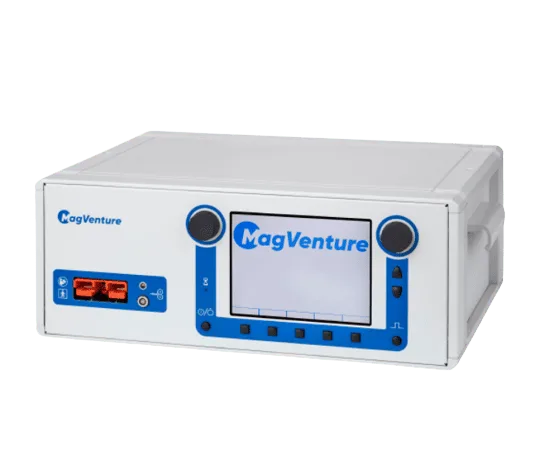
MagVenture MagPro R30, FDA-cleared for major depressive disorder.
Standard TMS sessions take about 30 minutes, including your first. Accelerated TMS sessions take about 10 minutes; your first accelerated session takes about 15, with 5 extra minutes for mapping.
TMS can be an option alongside or instead of medication changes, decided with your clinician.
The differences that matter
Visits are usually most weekdays for several weeks; your clinician sets your schedule.
Side effects matter most for people who've already failed antidepressants. Common antidepressant side effects:
- Weight gain
- Sexual dysfunction
- GI distress, especially the first few weeks
- Emotional blunting
- Sleep disruption either way (too sleepy or too wired)
- Possible discontinuation symptoms when tapering
TMS side effects:
- Mild scalp tenderness during treatment
- Tension headache, treatable with Tylenol
- A clinician can review your history, current concerns and care preferences during a consultation.
For people who couldn't tolerate medication, that side effect profile is the entire conversation.
Who fits each treatment
Antidepressants make sense if:
- This is your first depressive episode and you haven't tried medication
- You can tolerate the timeline and side-effect profile
- You're looking for the most affordable option
Visits are usually most weekdays for several weeks; your clinician sets your schedule.
TMS makes sense if:
- Past medications had side effects that were untenable
- You're already on multiple medications and don't want to add more
- You've completed therapy and need a different lever
- You're a veteran or older patient with a heavy medication stack
MagVenture MagPro R30, FDA-cleared for major depressive disorder.
TMS can be an option alongside or instead of medication changes, decided with your clinician.
Response varies. Your clinician can discuss questions, limitations, and how your care plan will be reviewed.
What the research actually shows
Response varies. Your clinician can discuss questions, limitations, and how your care plan will be reviewed.
Response varies. Your clinician can discuss questions, limitations, and how your care plan will be reviewed.
If you've already tried two or three medications, TMS gives you better odds than another medication trial.
How we actually treat this at RSLNT
At RSLNT Wellness, we don't pick treatments by ideology. We pick them by fit.
Our licensed clinicians build a counseling plan around you.
Medication management when you haven't fully explored that path. SSRIs, SNRIs, bupropion, and others depending on history. We don't push pills. We don't withhold them either.
TMS can be an option alongside or instead of medication changes, decided with your clinician.
The right answer is sometimes one path. Sometimes it's both at once. We figure that out with you.
Frequently asked questions
Can I stay on my antidepressant during TMS?
Response varies. Your clinician can discuss questions, limitations, and how your care plan will be reviewed.
What's the failure rate for both?
A clinician can review your history, current concerns and care preferences during a consultation.
How do I know which one to try first?
If you haven't tried any antidepressant and your symptoms are mild to moderate, start with a medication trial. If you've already tried two or more and they didn't work, TMS is the more evidence-based next move.
Our focus is your care. Cost should never stand between you and getting help. We check your insurance first, talk through payment options and in-house financing, and cover it all at your free consult.
RSLNT Wellness accepts TRICARE, TriWest and VA Community Care. VA Community Care usually starts with a VA referral, and we confirm referrals and benefits at your consult.
Keep Reading
Related articles



Ready to feel like yourself again?
Schedule a free consultation to see if TMS therapy is right for you.
Book Your Consultation