
TMS
A course of device-based treatment delivered in scheduled clinic visits. Response and side effects are monitored throughout the course.
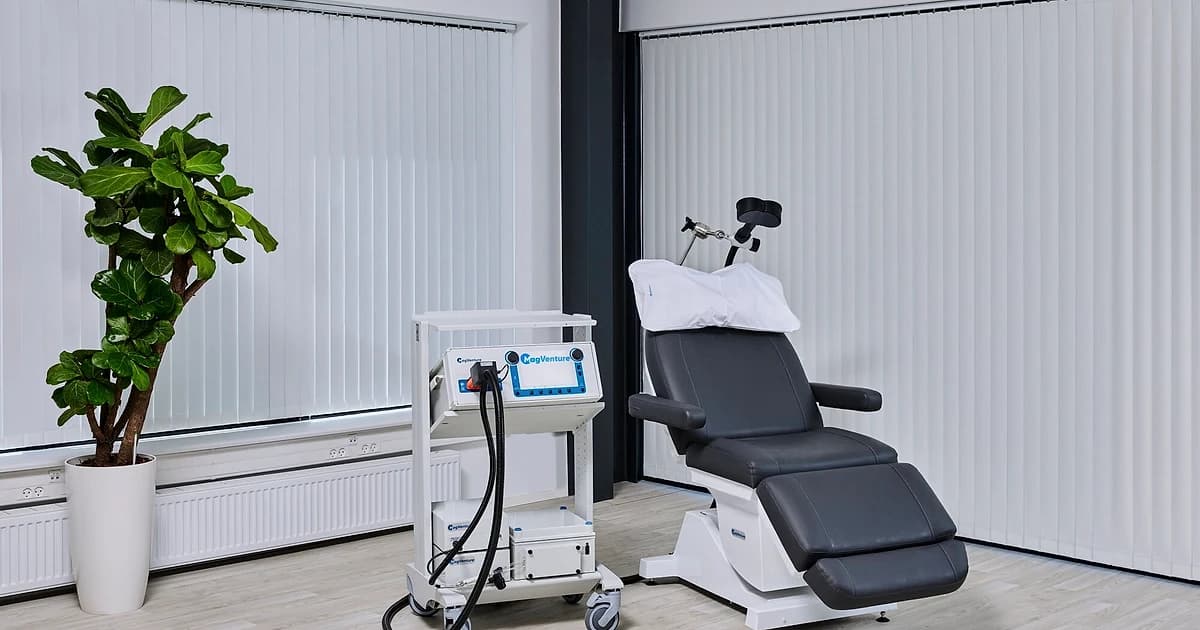
Transcranial Magnetic Stimulation uses a coil placed near the scalp to deliver brief magnetic fields to a clinician-selected brain target. RSLNT uses the MagVenture MagPro R30. The MagPro R30 is FDA-cleared for adult major depressive disorder (MDD).
Device clearance does not mean every protocol fits every person. Your clinician must confirm the indication, safety, and protocol; availability at RSLNT must be confirmed during your consultation.
The Science
The FDA classifies transcranial magnetic stimulation systems as devices that use magnetic fields to induce electrical currents in targeted cortical areas. Treatment is noninvasive: the coil stays outside the body and no anesthesia is used.
During treatment, the coil delivers repeated pulses according to a prescribed device setting and target. You may hear clicks and feel tapping on the scalp. The exact location, intensity, and schedule depend on the diagnosis, protocol, and your clinician's assessment.
Repeated sessions may support changes in targeted circuits. Your clinician measures symptoms through the course so the plan can adjust. No guaranteed lasting relief.
A coil outside the head produces brief magnetic fields that induce electrical currents in a targeted cortical area.
The diagnosis, FDA-cleared indication, mapping, safety screen, and prescribed protocol guide coil placement and settings.
Repeated sessions may support changes in targeted circuits. Your clinician measures symptoms through the course so the plan can adjust. No guaranteed lasting relief.
Symptoms are measured through the treatment course so your care team can see whether the plan is working.
Brain Targets
TMS is not one-size-fits-all. Device clearance (for the MagPro R30, adult major depressive disorder) does not establish eligibility, insurance coverage, or local protocol availability for an individual patient. RSLNT reviews those questions during the consultation and clinical evaluation.
Left Dorsolateral Prefrontal Cortex (DLPFC)
For major depression, a clinician selects the treatment target and protocol after reviewing symptoms, history, safety factors, and device labeling.
Learn moreClinician review
If OCD is part of your picture, your clinician will discuss appropriate options at your consult. The MagVenture MagPro R30 is FDA-cleared for adult major depressive disorder.
Learn moreClinical evaluation first
Anxiety symptoms require their own assessment. A care plan may include counseling or medication management, with TMS considered only when a cleared indication and the clinical evaluation support it.
Learn moreTrauma-informed care plan
PTSD symptoms call for trauma-informed evaluation and care. TMS is not presented here as a stand-alone PTSD indication; a clinician can assess co-occurring conditions and appropriate options.
Learn moreA Typical Session
MagVenture says treatment time can range from 3 to 60 minutes depending on the protocol. Mapping and clinical check-in can add time, especially at the first visit. RSLNT confirms the prescribed schedule before treatment starts.
The team reviews current medications, seizure risk, implanted metal or electronic devices, and other safety factors. Follow the preparation instructions provided for your visit.
You sit in the treatment chair while the clinical team identifies the prescribed target and records the positioning and treatment settings.
The coil delivers pulses in short sequences. You remain awake and may hear clicking and feel tapping on the scalp. Tell the team about discomfort or any change in how you feel.
There is usually no anesthesia recovery period. The team documents the visit and gives any individual instructions before you return to normal activities.
Treatment Planning
These options do different jobs and are not interchangeable. A clinician may recommend one approach or a coordinated plan based on diagnosis, treatment history, preferences, safety, and response.
A course of device-based treatment delivered in scheduled clinic visits. Response and side effects are monitored throughout the course.
Prescription options can be used alone or alongside other care. Starting, changing, or stopping medication belongs with the prescribing clinician.
Therapy builds skills and addresses patterns, experiences, and goals. The approach and visit frequency depend on the patient and treatment plan.
Do not stop or change medication based on this page. Your treating clinician can explain how TMS, medication management, and counseling fit together for your situation.
Protocol update
MagVenture lists standard and accelerated FDA-cleared protocols for major depressive disorder within its system family. A shorter schedule can involve multiple sessions in one day and is not interchangeable with a standard course. Eligibility, the exact protocol, insurance requirements, and availability at RSLNT must all be confirmed before scheduling.
Clinical Sources
We use current manufacturer and FDA information for device clearance, timing, and treatment basics. These sources explain the device; your clinician determines whether treatment is appropriate for you.
FAQ
Transcranial Magnetic Stimulation (TMS) is a noninvasive treatment that uses brief magnetic fields to induce electrical currents in targeted areas of the brain. It is delivered while you are awake and does not require anesthesia.
MagVenture says treatment time can range from 3 to 60 minutes depending on the protocol. Your diagnosis, prescribed protocol, mapping, and visit type determine the exact time. RSLNT confirms your schedule before treatment starts.
MagVenture describes a typical standard course as approximately six weeks. Some cleared accelerated protocols use a shorter, more intensive schedule. Clinical eligibility and availability at RSLNT must be confirmed during your consultation.
You sit in a treatment chair while a trained team member positions the coil according to your prescribed target. You remain awake and may feel tapping on the scalp. After the session, there is usually no anesthesia recovery period; follow any individual instructions from your clinician.
People commonly describe tapping or knocking on the scalp. Scalp discomfort or headache can occur, especially early in a course. Tell the treatment team about discomfort so they can assess it and adjust positioning when appropriate.
Commonly reported effects include scalp discomfort and headache. TMS also has uncommon but serious risks, including seizure. Screening for implanted metal or electronic devices, seizure risk, medications, and other safety factors is part of the clinical evaluation.
TMS typically does not use sedation or anesthesia, and MagVenture notes that people can generally return to normal activities after treatment. Follow your clinician’s instructions and do not drive if you feel unwell.
TMS is non-invasive and requires no anesthesia. You remain fully awake. Seizure is uncommon. ECT is a different treatment that uses anesthesia and intentionally induces a seizure.
How long results last varies. Your clinician tracks symptoms after the course and discusses maintenance only if it fits your plan. No lasting-relief timeline promise.
Schedule a free, confidential consultation. We'll evaluate your situation, answer your questions, and determine the best treatment approach.